
Shipping cargo from Canada to Nigeria can be straightforward when you understand the available shipping methods, required documents, customs procedures, costs, and delivery options.
Whether you are sending personal effects, household goods, business merchandise, electronics, clothing, machinery, food products, or commercial cargo, choosing the right freight method can save you money and avoid unnecessary delays.
This complete 2026 guide explains how to ship cargo from Toronto, Vancouver and other Canadian cities to Lagos, Nigeria, using air freight or sea freight.
1. Choose Between Air Freight and Sea Freight
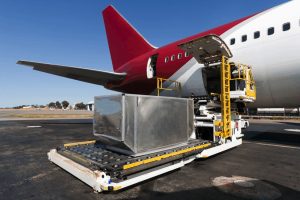
The two main options for shipping cargo from Canada to Nigeria are air freight and sea freight.
Air Freight from Canada to Nigeria
Air freight is generally suitable when you need your cargo delivered faster or when the shipment is relatively small or valuable.
It can be suitable for:
- Documents and parcels
- Clothing
- Electronics
- Personal effects
- Spare parts
- Business samples
- Small commercial shipments
- Urgent cargo
The final cost depends on factors including the shipment’s actual weight, dimensional/volumetric weight, commodity, origin, destination and service level.
Sea Freight from Canada to Nigeria
Sea freight is commonly used for larger or heavier shipments where transit time is less critical.
It can be suitable for:
- Household goods
- Furniture
- Vehicles and equipment, subject to Nigerian rules
- Machinery
- Commercial merchandise
- Bulk cargo
- Large shipments
- Business inventory
Depending on the shipment, you may use a full container load or less-than-container load service.
full container load: You use an entire container.
less-than-container load: Your cargo shares container space with cargo belonging to other shippers.
For large shipments, sea freight can be more economical on a per-unit basis, but the total landed cost must also account for handling, documentation, customs clearance and delivery.

2. Decide Where Your Cargo Will Be Collected
You don’t necessarily have to take your cargo directly to a port or airport.
A freight company can arrange pickup from your home, office, warehouse or supplier depending on the service and location.
For example:
Vancouver → Lagos
Montreal → Lagos
Toronto → Lagos
The shipment can then be transported to the appropriate Canadian export point before continuing to Nigeria.
If you are sending goods from another Canadian city, ask the freight company whether they provide door pickup or terminal delivery.

3. Prepare Your Cargo Properly
Proper packaging is extremely important.
Before handing over your shipment:
- Use strong cartons or appropriate shipping containers.
- Protect fragile items with suitable cushioning.
- Seal cartons securely.
- Label packages clearly.
- Keep an inventory of everything inside the shipment.
- Separate fragile items where appropriate.
- Do not conceal prohibited or restricted goods.
- Take photographs of valuable items before shipment.
For commercial cargo, the description of the goods should be accurate and sufficiently detailed for customs purposes.
Avoid descriptions such as “goods,” “items,” “personal stuff” or “miscellaneous” when a more precise description is required.
4. Prepare the Required Shipping Documents
Depending on the cargo and shipping arrangement, documents can include:
- Commercial invoice
- Packing list
- Air waybill for air freight
- Bill of lading for sea freight
- Identification documents where applicable
- Purchase invoice or proof of value
- Export documentation
- Import documentation
- Permits or certificates for regulated products
Canadian authorities provide specific export-reporting requirements for commercial exports. Canada’s official guidance also identifies documents such as commercial invoices and transportation documents as evidence associated with exports
5. Check Whether Your Goods Are Allowed Into
Nigeria
Do not ship first and check later.
Nigeria has import prohibitions and restrictions covering specific products and HS classifications. The Nigeria Customs Service provides an online tariff and import-prohibition reference, including a 2026 list of prohibited items.
This is particularly important for:
- Food products
- Agricultural products
- Pharmaceuticals
- Chemicals
- Used equipment
- Vehicles
- Certain electronics
- Weapons and controlled goods
- Other regulated commodities
If you are unsure whether your particular product can be imported, check the applicable Nigerian requirements before paying for shipment.
6. Understand Nigerian Customs Duty
“How much will customs charge me in Nigeria?”
There is no single customs rate for every shipment.
Nigeria Customs determines applicable duty based on factors including the classification and customs value of the goods. The Nigeria Customs Service explains that tariff classification under the applicable tariff framework is central to determining the duty rate.
Therefore, don’t rely on a freight company’s estimate based only on the weight of your shipment.
The potential landed cost may include:
Product value + freight + insurance/other applicable charges + customs duty/taxes + terminal/handling charges + clearance + local delivery.

7. Know About Nigeria’s De Minimis Threshold
Nigeria Customs announced a US$300 de minimis threshold for qualifying low-value consignments imported through express shipments or passenger baggage, subject to the applicable conditions. The measure took effect on 8 September 2025.
However, this should not be interpreted as meaning that every shipment below US$300 automatically avoids every requirement.
8. Door-to-Door vs Port-to-Port Shipping
Door-to-Door
The logistics company coordinates pickup in Canada and delivery to the agreed Nigerian address, subject to the service terms.
Example:
Toronto → Lagos address
This is convenient for customers who don’t want to arrange separate transportation at either end.
Port-to-Port
The cargo moves between designated ports/terminals, while the customer or their agent handles some of the transportation and clearance arrangements.
Door-to-Port
Cargo is collected from the Canadian address and transported to the Nigerian port.
Port-to-Door
Cargo is transported to Nigeria and then delivered to the customer’s Nigerian address after the applicable clearance process.
9. How Much Does It Cost to Ship Cargo from
Canada to Nigeria?
There is no universal Canada-to-Nigeria shipping price.
Your quote can depend on:
- Pickup location
- Destination in Nigeria
- Air or sea freight
- Actual weight
- Volume/dimensions
- Commodity
- Packaging
- Number of cartons
- Container type
- Customs requirements
- Insurance
- Port/terminal charges
- Clearance
- Final delivery location
10. How Long Does Shipping From Canada to
Nigeria Take?
Transit time varies according to:
- Canadian origin
- Air or sea service
- Carrier
- Routing
- Customs processing
- Port/airport congestion
- Documentation
- Nature of the goods
- Final delivery location
Air freight is generally selected when speed is important.
Sea freight is generally selected when the shipment is larger and the customer can accommodate a longer transit process.
Rather than relying on a generic number of days, request the current estimated transit time for your exact shipment.
11. What Happens After the Cargo Arrives in
Nigeria?
After arrival, the shipment may need to go through:
- Arrival processing
- Customs documentation
- Customs assessment
- Payment of applicable duties/taxes and charges
- Customs release
- Terminal/warehouse processing
- Local transportation
- Final delivery
For commercial imports, accurate documentation and correct commodity classification are particularly important.
12. Why You Should Use a Freight Forwarder
Shipping internationally involves more than putting goods on an aircraft or vessel.
A professional freight forwarder can help coordinate:
- Cargo pickup
- Packaging
- Freight booking
- Export documentation
- Consolidation
- Air freight
- Sea freight
- Customs coordination
- Cargo tracking
- Port/terminal processes
- Final delivery
Canadian customs guidance also recognizes that customs brokers or freight forwarders may arrange transportation as part of their services.
13. Why You Should Use a Freight Forwarder
Shipping internationally involves more than putting goods on an aircraft or vessel.
A professional freight forwarder can help coordinate:
- Cargo pickup
- Packaging
- Freight booking
- Export documentation
- Consolidation
- Air freight
- Sea freight
- Customs coordination
- Cargo tracking
- Port/terminal processes
- Final delivery
Canadian customs guidance also recognizes that customs brokers or freight forwarders may arrange transportation as part of their services.
15. How to Ship From Vancouver to Lagos
For customers in Vancouver and British Columbia, the process is similar:
Vancouver pickup → Export processing → Air/Sea freight → Lagos → Customs clearance → Delivery
Because the shipment starts farther from the main Canadian logistics hubs used for the selected service, the domestic Canadian transportation portion can affect the final quotation.
Therefore, provide your exact pickup location and cargo dimensions when requesting a quote.
16. Common Mistakes to Avoid
❌ Declaring the wrong cargo description
Incorrect declarations can create customs problems.
❌ Under-declaring the value
Don’t deliberately undervalue goods to try to reduce customs charges.
❌ Shipping prohibited goods
Always check the applicable Nigerian restrictions before shipment.
❌ Ignoring dimensions
For air freight, dimensions can affect the chargeable weight.
❌ Comparing only the freight rate
A cheap freight quote may exclude customs clearance, handling, destination charges or delivery.
❌ Poor packaging
Damaged cargo can cost far more than proper packaging.
❌ Not keeping your documents
Keep invoices, packing lists, tracking information and shipment documents.
17. Step-by-Step: How to Ship Cargo From
Canada to Nigeria
Here is the simple process:
Step 1: Decide what you want to ship.
Step 2: Check whether the item is permitted into Nigeria.
Step 3: Measure and weigh your cargo.
Step 4: Prepare your invoice and packing list where applicable.
Step 5: Request an air or sea freight quotation.
Step 6: Choose pickup or drop-off.
Step 7: Package and label the cargo.
Step 8: Complete the required export documentation.
Step 9: Cargo is transported from Canada.
Step 10: Shipment arrives in Nigeria.
Step 11: Customs and applicable destination processes are completed.
Step 12: Cargo is released and delivered or collected.
Ship Cargo From Canada to Lagos With TD
Travel & Logistics
If you are looking for a Canada-to-Nigeria cargo shipping company, TD Travel & Logistics provides logistics solutions for customers shipping goods between Canada and Nigeria.
We can assist with air freight and sea freight, cargo pickup, shipment coordination, customs-related processes and delivery arrangements.
Whether you are shipping from Toronto, Vancouver or elsewhere in Canada to Lagos, Nigeria, provide your cargo details so the appropriate shipping option can be determined.
Request a Shipping Quote
Send us:
1. Pickup city:
Toronto / Vancouver / Montreal / Other
2. Destination:
Lagos / Abuja / Other Nigerian city
3. Type of goods:
Clothing / Food / Electronics / Household goods / Commercial goods / Other
4. Number of cartons:
5. Weight:
6. Dimensions:
7. Preferred method:
Air Freight / Sea Freight
8. Pickup required:
Yes / No
TD Travel & Logistics
Canada → Nigeria Cargo Shipping
Air Freight | Sea Freight | Cargo Pickup | Customs Coordination | Delivery
For the most accurate quotation, provide the cargo type, weight/volume, pickup location and Nigerian destination rather than requesting a price based only on the number of cartons